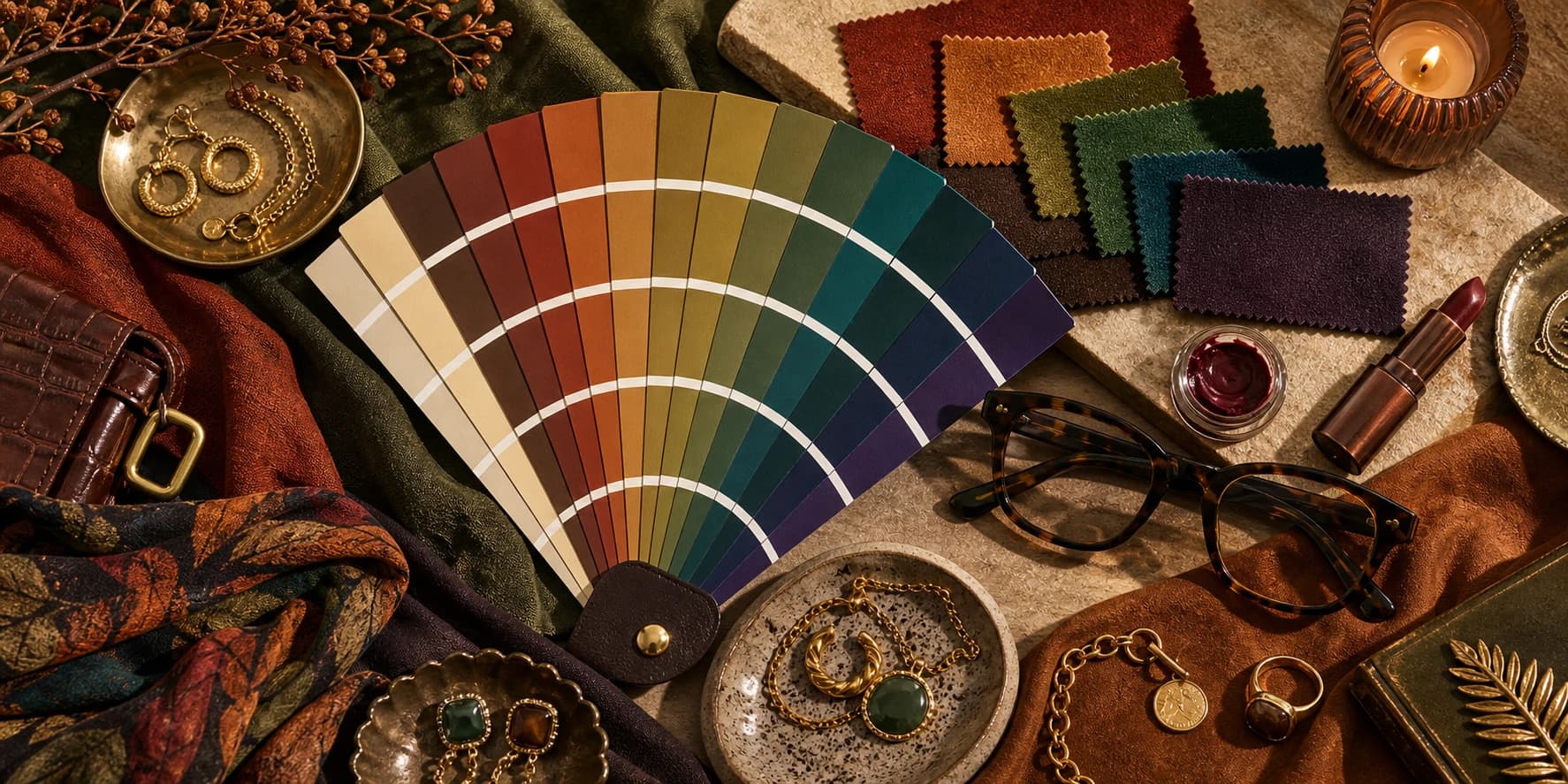
Dark Autumn color palette guide.
Deep, warm-neutral colors with spice, shadow, and burnished metal. Dark Autumn needs depth first, then warmth. It can handle drama when the color stays earthy.
Colors are easier to trust when you can see them together.
Ox blood
Deep brick
Burnt orange
Deep rust
Deep mustard
Dark olive
Warm forest
Petrol teal
Aubergine
Warm plum
Mahogany
Burnished red
Spiced copper
Antique mustard
Deep moss
Deep peacock
Best colors for Dark Autumn
Use espresso, deep olive, forest, peacock, aubergine, oxblood, rust, and bronze.
Strong Dark Autumn colors often include Ox blood, Deep brick, Burnt orange, Deep rust, Deep mustard, Dark olive, Warm forest, Petrol teal. Use these near the face first: tops, scarves, glasses, makeup, and jewelry are the fastest tests.
Colors Dark Autumn should use carefully
Pastels, icy colors, powdery pink, neon brights, and blue-white can feel too light.
Common caution colors include Pastel pink, Icy blue, Pure white, Neon green, Powder blue, Light lavender. These shades are not banned, but they usually work better as shoes, bags, lower-half pieces, or small accents away from the face.
Wardrobe neutrals
Espresso, dark olive, deep teal, bronze, and cream work better than stark black and white.
A palette becomes easier to wear when the neutrals are right. Start with two or three reliable neutrals, then add accent colors that repeat across tops, makeup, and accessories.
Makeup and hair guidance
Oxblood, deep brick, bronze, espresso liner, and warm plum can look refined.
Deep warm brunette, espresso, dark auburn, and black-brown usually support the depth.
Use this as a direction, not a fixed rule. Hair color, makeup texture, and personal contrast all matter, so test changes in natural light before making a big commitment.
Keep exploring your palette.
More Paletta guides for comparing seasons, reading photo signals, and using your colors in real life.
Upload a clear photo and Paletta will give you a season, 24-color palette, and style boards.