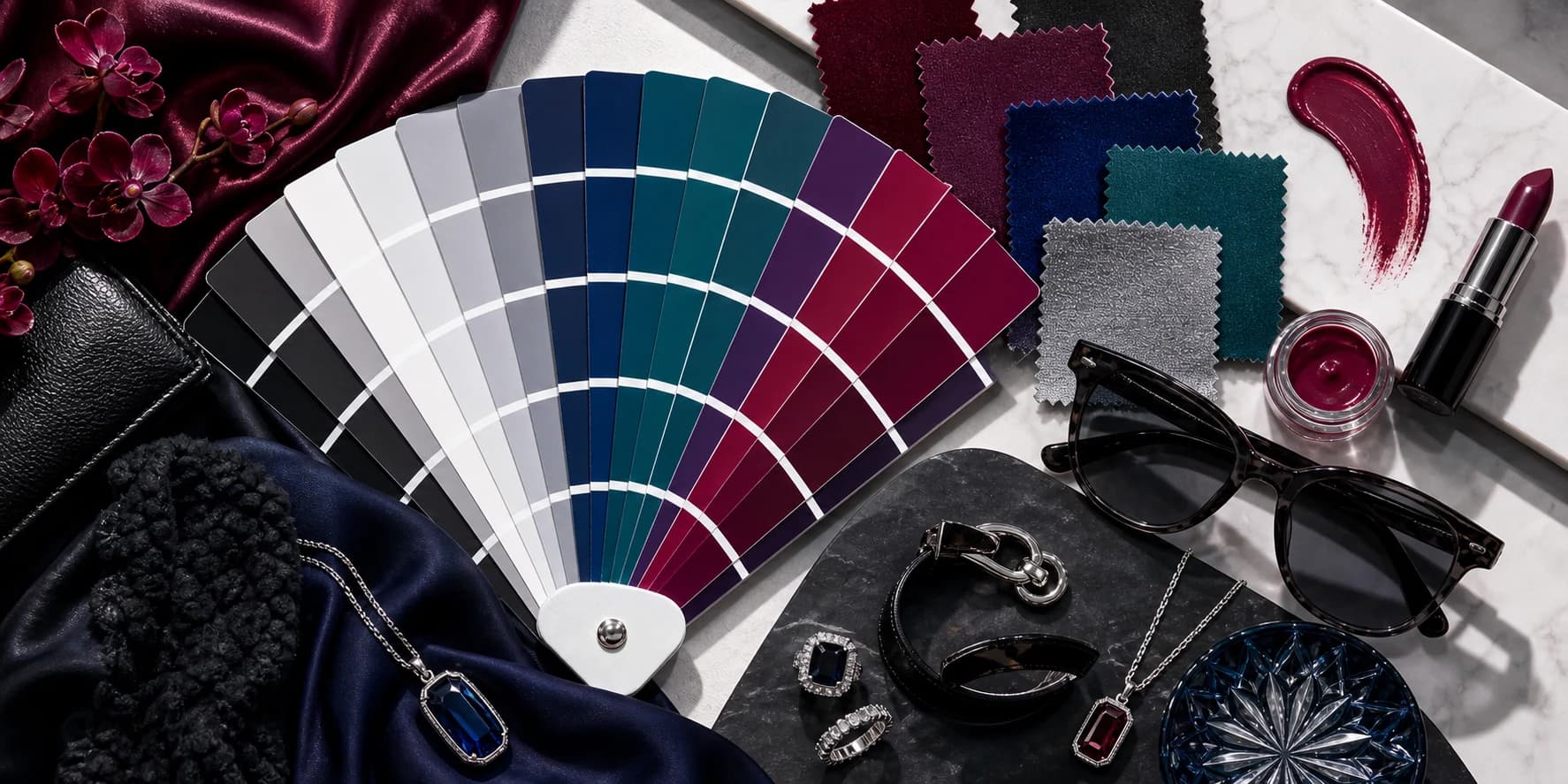
Dark Winter color palette guide.
Deep, cool-neutral colors with jewel depth and sharp contrast. Dark Winter needs depth, coolness, and contrast. It can borrow some richness from Dark Autumn when the color stays clean.
Colors are easier to trust when you can see them together.
Cool burgundy
Deep wine
Deep ruby
Cool fuchsia
Blackened plum
Eggplant
Deep cobalt
Deep sapphire
Deep emerald
Cool pine
Black cherry
Cassis
Pomegranate
Deep teal
Deep violet
Bottle green
Best colors for Dark Winter
Use burgundy, pine, sapphire, charcoal, black, icy gray, deep teal, and aubergine.
Strong Dark Winter colors often include Cool burgundy, Deep wine, Deep ruby, Cool fuchsia, Blackened plum, Eggplant, Deep cobalt, Deep sapphire. Use these near the face first: tops, scarves, glasses, makeup, and jewelry are the fastest tests.
Colors Dark Winter should use carefully
Pale peach, camel, warm orange, dusty beige, powder pastels, and muddy olive can weaken the read.
Common caution colors include Peach, Camel, Beige, Soft sage, Baby pink, Powder blue. These shades are not banned, but they usually work better as shoes, bags, lower-half pieces, or small accents away from the face.
Wardrobe neutrals
Black, charcoal, ink navy, cool espresso, and crisp white make the easiest base.
A palette becomes easier to wear when the neutrals are right. Start with two or three reliable neutrals, then add accent colors that repeat across tops, makeup, and accessories.
Makeup and hair guidance
Wine, cranberry, deep berry, cool espresso, and blackened plum usually work well.
Cool espresso, black-brown, blue-black, and deep cool brunette support the season.
Use this as a direction, not a fixed rule. Hair color, makeup texture, and personal contrast all matter, so test changes in natural light before making a big commitment.
Keep exploring your palette.
More Paletta guides for comparing seasons, reading photo signals, and using your colors in real life.
Upload a clear photo and Paletta will give you a season, 24-color palette, and style boards.